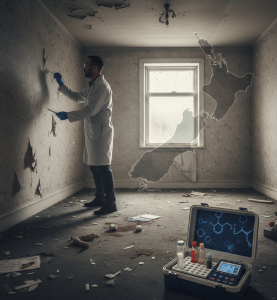
Why testing methods matter for landlords
Not all meth tests are equal. For landlords, the testing method used matters because it determines whether results are:
- accurate
- defensible
- accepted by insurers
- usable in disputes or remediation decisions
Using the wrong method can create uncertainty rather than clarity.
For a broader context on how testing fits into the law, start with the meth regulations guide.
What standard governs meth testing in NZ rentals?
Meth testing and decontamination in New Zealand are governed by NZS 8510.
This standard sets out:
- How samples must be collected
- Who can carry out testing
- How results must be reported
- What documentation is required
Landlords are not expected to manage this themselves, but they are responsible for ensuring the testing provider follows the correct standard.
If you are reviewing how different compliance obligations work together, this compliance overview provides helpful context.
What meth testing methods are commonly used?

Surface sampling
Surface sampling is the primary method used in rental properties. Swabs or wipes are taken from selected surfaces such as walls, benches, and high-contact areas.
These samples are then analysed by a laboratory and reported as a numeric result.
Targeted sampling
Targeted sampling focuses on areas considered higher risk based on:
- property layout
- inspection findings
- prior test results
This approach balances accuracy with practicality and cost.
Clearance testing
Clearance testing is carried out after remediation to confirm the property meets acceptable levels before re-letting.
If you are unsure how results are interpreted, this guide to meth contamination levels explains what different outcomes mean.

Who is allowed to carry out meth testing?
Testing should be carried out by qualified, independent professionals.
Landlords should avoid:
- DIY test kits
- Informal or undocumented testing
- Providers who cannot demonstrate compliance with NZ standards
Using certified providers ensures results can be relied on for insurance, remediation, and tenancy decisions.
What should a compliant meth test report include?
A compliant test report should clearly show:
- Sampling locations
- Testing method used
- Laboratory analysis results
- Results reported in µg per 100 cm²
- Date of testing
- Provider details
Clear reports make it easier to decide what action, if any, is required.
If inspections form part of your documentation process, this inspection guide shows how testing fits alongside routine reporting.
How testing methods affect cost and responsibility
Testing method choices can influence:
- Testing cost
- Whether further testing is needed
- How clearly responsibility can be assessed
Using recognised methods from the start reduces the chance of:
- Repeat testing
- Disputed results
- Delayed remediation
For landlords concerned about cost responsibility, this guide on who pays for meth testing and cleaning explains how evidence affects outcomes.
How property managers coordinate meth testing
Professional property managers coordinate meth testing by:
- Selecting compliant providers
- Reviewing reports
- Advising on next steps
- Arranging remediation and clearance testing if required
- Keeping all documentation in one place
This removes uncertainty and helps landlords stay compliant without micromanaging the process.
If you are considering professional support, this guide on why to use a property manager explains how compliance fits into managed services.
Frequently Asked Questions
DIY kits are not recommended. They may not meet recognised standards, and results may not be reliable for compliance or insurance purposes.
Yes. Laboratory analysis is required to produce defensible results reported in the correct units.
Yes. Clearance testing confirms remediation has been successful before re-letting.
There is no fixed schedule. Testing is typically done as part of baseline testing, when concerns arise, or after remediation.
Start with the main meth regulations overview and seek professional guidance.
Summary
- Meth testing in NZ rentals must follow NZS 8510
- Surface sampling by qualified professionals is the standard approach
- Results must be reported clearly in µg per 100 cm²
- Clearance testing is required after remediation
- Using recognised methods reduces disputes and uncertaint
Disclaimer: This information is accurate as of the date of publication and reflects the methamphetamine regulations and guidance in place at that time. Meth regulations in New Zealand are expected to continue evolving, including further changes anticipated in 2026. Landlords should seek up-to-date advice or professional guidance to ensure ongoing compliance.
Get Your Professional Rental Appraisal
Ready to discover your property’s true rental potential? 360 Property Management offers free, no-obligation rental appraisals across Auckland.
What’s included:
- Comprehensive 30+ point property assessment
- Detailed market comparison analysis
- Compliance check against current regulations
- Strategic recommendations for value improvement
- Professional photography (if proceeding with management)
Book Your Free Appraisal Today
📞 Call: 09 636 7355 📧 Email: 360pm.nz@raywhite.com 🌐 Online: Request Your Free Appraisal
About the Author:
This guide was created by the award-winning team at 360 Property Management, Auckland’s specialist property management company. With no sales distractions and dedicated teams for operations, compliance, and accounts, we focus 100% on maximising returns for property investors.