The Pros and Cons of Buying an Apartment in Auckland’s Hotel-Style Buildings
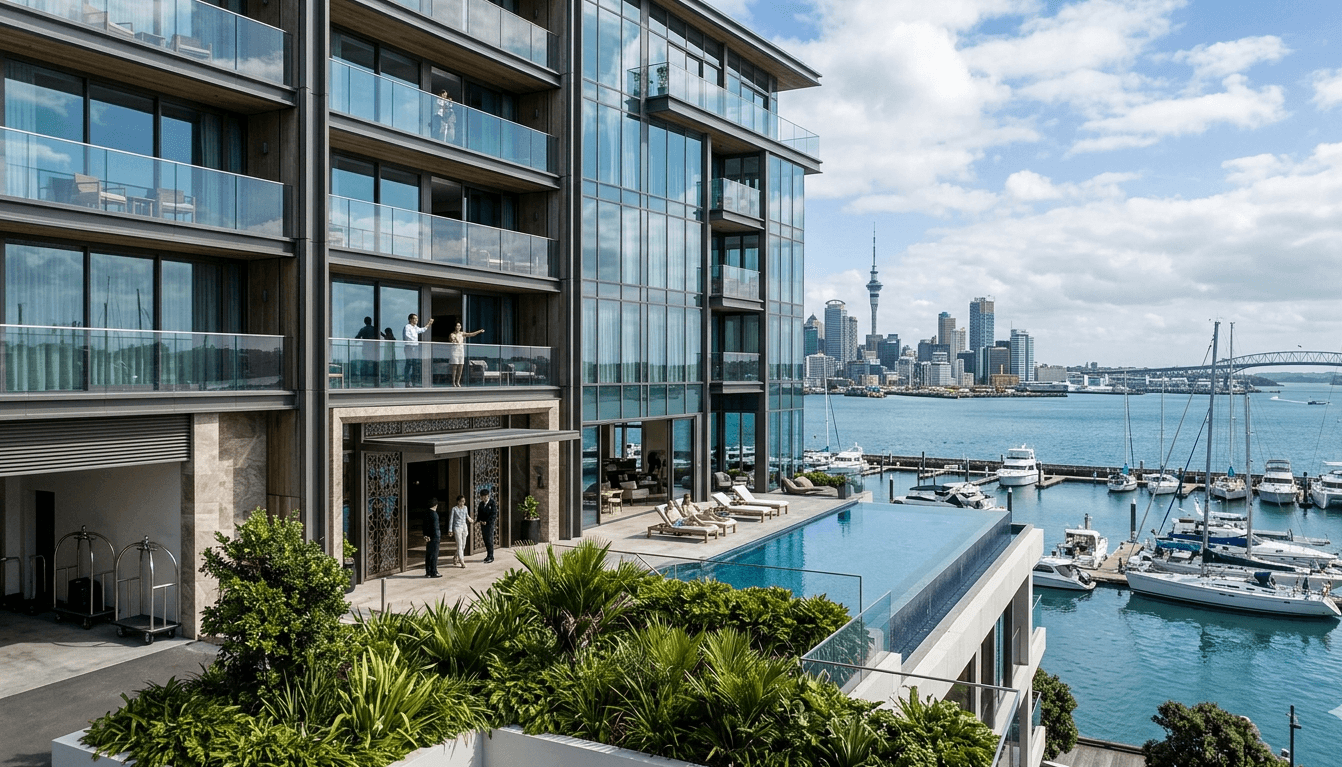
In Auckland CBD and waterfront areas, some apartment buildings have connections to serviced apartment operations, hotel-style management models, or mixed-use accommodation environments.
These buildings can appeal to certain tenants and investors, but they often function differently from traditional residential apartment developments.
Understanding the differences is important before purchasing.
What Is a Hotel-Style Apartment Building?
A hotel-style apartment building is typically a building that operates partly or fully in a serviced accommodation or hospitality-style environment.
This may include:
- serviced apartments
- short-term accommodation operations
- mixed owner-occupier and hotel usage
- concierge-managed buildings
- buildings with hotel-style amenities and services
Some buildings may contain a combination of:
- permanent residents
- long-term tenants
- short-term accommodation guests
- investor-owned apartments
The building structure and management model can influence both tenant experience and investment performance.

Why Do Investors Buy Apartments in Hotel-Style Buildings?
Some investors are attracted to these buildings because they may offer:
- premium locations
- strong presentation standards
- concierge services
- attractive shared facilities
- lifestyle appeal
- strong visibility in central Auckland locations
In some cases, hotel-style buildings may also appeal to tenants seeking convenience-focused living environments.
These buildings are often located in areas such as:
- Viaduct
- waterfront precincts
- central CBD locations
- tourism-oriented areas
What Are the Main Advantages of Hotel-Style Apartment Buildings?
Depending on the building, potential advantages may include:
- strong building presentation
- concierge services
- premium amenities
- central locations
- security systems
- professionally maintained common areas
Some tenants may also value the lifestyle atmosphere associated with hotel-style buildings.
For certain executive or relocating tenants, this environment can feel convenient and professionally managed.
What Are the Main Risks or Downsides?
Hotel-style apartment buildings can also create additional ownership considerations.
Potential downsides may include:
- higher body corporate fees
- increased wear in common areas
- higher resident turnover
- less stable building culture
- operational restrictions
- financing limitations in some cases
- noise or disruption from short-term occupancy
In buildings with heavy short-term accommodation activity, long-term tenants may sometimes prefer more stable residential-focused environments.
How Do Hotel-Style Buildings Compare to Traditional Apartment Buildings?
| Factor | Hotel-Style Buildings | Traditional Residential Buildings |
|---|---|---|
| Resident Turnover | Often higher turnover | Typically more stable long-term residents |
| Building Atmosphere | More hospitality-focused | More residential-focused |
| Amenities | Often extensive shared facilities | Varies by building |
| Ownership Costs | Can be higher | May be more predictable |
| Tenant Experience | May feel less private in some buildings | Often more community-oriented |
| Management Structure | May involve mixed operational models | Usually simpler residential management |
Do Long-Term Tenants Like Hotel-Style Buildings?
Some do, particularly tenants who value:
- concierge services
- premium presentation
- central locations
- convenience-oriented living
However, some long-term renters may prefer buildings with:
- quieter environments
- lower resident turnover
- stronger residential communities
- fewer short-term guests
Tenant preferences often depend on the specific building environment and management quality.
Can Hotel-Style Buildings Affect Financing or Resale?
In some cases, yes.
Certain lenders may assess mixed-use or serviced apartment buildings differently from standard residential apartment buildings.
Factors that may affect financing include:
- building usage structure
- owner-occupier ratios
- short-term accommodation exposure
- apartment size
- building management arrangements
Investors should seek professional financial and legal advice before purchasing.
Are Ownership Costs Higher in Hotel-Style Buildings?
They can be.
Additional operational features such as:
- concierge staffing
- premium facilities
- hospitality services
- increased maintenance demands
may contribute to higher body corporate fees and operational costs.
Investors should carefully review financial documents and understand how shared expenses are managed within the building.
What Should Investors Check Before Buying?
A practical approach includes:
1. Review Building Usage Structure
Understand whether the building is primarily residential, mixed-use, or serviced accommodation-focused.
2. Assess Resident Stability
Buildings with stable long-term residents may create stronger tenant retention environments.
3. Review Body Corporate Financials
Check ongoing operational costs and future maintenance exposure.
4. Understand Tenant Demographics
Different building types attract different renter profiles.
5. Speak With an Apartment Property Manager
An experienced property manager can provide insight into tenant demand and operational challenges within hotel-style apartment buildings.
Building Operations Can Influence Long-Term Investment Performance
Hotel-style apartment buildings can offer attractive locations, strong amenities, and premium presentation, but they also come with operational differences that investors should carefully understand before buying.
For long-term rental investors, building stability, tenant experience, ownership costs, and management quality often matter just as much as location or appearance.
Careful due diligence can help investors determine whether a hotel-style apartment building aligns with their long-term investment strategy and tenant expectations.




Expert Property Management in Auckland City
If you own a rental property in Auckland City and want to reduce vacancy, protect income, and improve long-term returns, the right management strategy makes all the difference.
Talk to 360 Property Management about a smarter approach to managing vacancy – from the start.
For general inquiries or more information, please email 360pm.nz@raywhite.com. If you are an existing client needing assistance, please submit a request through our Client Portal or call (09) 636 7355.
Frequently Asked Questions
A hotel-style apartment building is typically a building that includes serviced accommodation features, hospitality-style operations, or mixed-use occupancy models.
They can be, depending on the building quality, location, tenant demand, and operational structure.
Some do, particularly buildings with concierge services, premium amenities, or hospitality-style operational costs.
Some tenants value the convenience and presentation, while others may prefer quieter residential-focused buildings.
In some cases, lenders may assess mixed-use or serviced apartment buildings differently from standard residential apartment developments.
This depends on the building occupancy mix and management quality. Buildings with high short-term occupancy may experience more turnover and activity.
Yes. Property managers with apartment experience can often provide insight into tenant demand, operational challenges, and building reputation before purchase.