Checklist for Overseas Landlords: What You Must Have in Place Before Renting Out Your NZ Property
If you are an overseas landlord, the safest way to rent out a New Zealand property is to set up the right contacts, documents, compliance checks, and record-keeping before the first tenant moves in. A simple checklist reduces delays, protects your insurance position, and helps avoid tenancy disputes when you are not in the country.
What do overseas landlords need to set up before renting out a NZ property?
Before marketing your property, you need three things locked in:
- A local point of contact who can act quickly
- Clear documentation and records (property condition, costs, approvals)
- A compliance-ready property that is safe, lawful, and insurable
If you want a practical view of how offshore rentals are run day to day, start with how we manage Auckland rentals for overseas landlords.

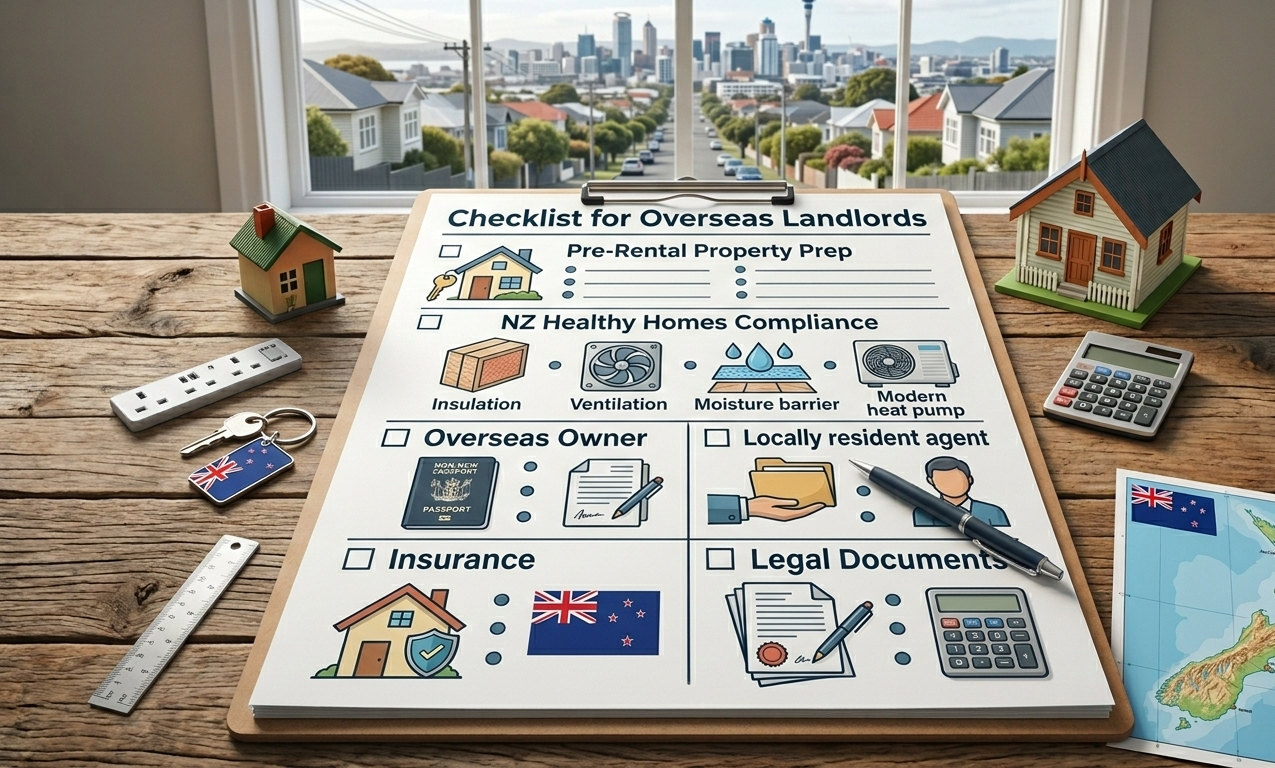
The overseas landlord checklist
Use this checklist as your pre-tenancy setup. If you already have a property manager, most of this can be coordinated for you, but it still helps to understand what is being put in place.
| Checklist item | Why it matters when you’re offshore | What “good” looks like |
|---|---|---|
| Local decision-maker and contact details | Time zones create delays | Clear authority, clear escalation path |
| Property access plan | Trades and inspections need entry | Updated keys, clear access notes and process |
| Baseline property condition records | Protects against disputes | Photos, inspection-style notes, date-stamped file |
| Maintenance plan and preferred trades | Emergencies do not wait | Approved trades, spending limits, urgency rules |
| Insurance confirmed for a rental | Coverage differs from owner-occupied | Correct policy, documentation expectations understood |
| Compliance checks completed | Non-compliance can cost time and money | Evidence stored, follow-ups scheduled |
| Rent collection and arrears process | Distance makes it harder to act fast | Clear escalation steps and consistent communication |
| Offshore-friendly reporting cadence | You need clarity without chasing | Monthly statements, inspection reports, clear updates |
| Record-keeping for tax and advisors | You may need to prove decisions later | Organised invoices, statements, inspection history |
| Exit flexibility | Your plans can change | Management supports holding or selling options |
Step by step: how to get set up from overseas
This is the simplest way to implement the checklist without overcomplicating it.
Step 1: Confirm your goal for the property
Are you renting long-term, holding for a period, or keeping the option to sell later? Your goal affects:
- how you prioritise maintenance
- how you set approval thresholds
- how you structure reporting and record-keeping
If you are unsure what level of involvement you want, the landlord journey overview is a helpful starting point.
Step 2: Put a local decision framework in writing
Overseas landlords get stuck when every small decision needs a late-night email chain.
Set:
- a spending limit for maintenance approvals
- what counts as urgent work (health, safety, water ingress)
- who is authorised if you cannot be reached
This is also where professional management reduces friction. If you are weighing up whether to self-manage from offshore, this guide explains the value of a property manager.
Step 3: Get the property inspection-ready and tenant-ready
You want a clean, safe, well-presented property that is easy to maintain.
Common pre-tenancy items include:
- addressing obvious maintenance issues
- confirming appliances and fixtures are safe and working
- tidying gardens and outdoor areas
- ensuring the property is realistically rentable for its condition
For a landlord-focused maintenance reference, use this property maintenance guide.
Step 4: Lock in inspections and documentation
Documentation is what protects you when you are not physically present.
Aim to have:
- a baseline condition record before the tenancy starts
- routine inspection reports are stored consistently
- a clear log of maintenance decisions and invoices
If you want to see how modern inspection reporting works in practice, this inspections page is a useful context.
Step 5: Confirm insurance and what evidence your insurer expects
Many issues become “insurance issues” only after something goes wrong. Overseas landlords are best protected when they confirm expectations early.
Review:
- whether the policy is set up for a tenanted property
- what documentation is required for claims
- how malicious damage, contamination, or vacancy are treated
A good starting point is the landlord insurance guide.
Step 6: Decide how you will keep records for tax and advisors
Property managers can provide statements and records, but they are not a replacement for an accountant or legal advisor.
As an overseas landlord, you should be able to quickly access:
- rent statements
- invoices and receipts
- inspection history
- maintenance approvals and timelines
If you want a broader view of tenancy and compliance changes that can affect record-keeping, this tenancy law changes guide is worth bookmarking.
What a property manager can coordinate for overseas landlords
A good Auckland property manager can coordinate the entire setup and keep it running, including:
- local access and trades
- inspections and reporting
- tenant communication and rent collection
- maintenance, triage, and documentation
- compliance oversight and reminders
For service details, visit Auckland property management.
Common mistakes overseas landlords make
These are the issues that most often create stress for offshore owners:
- no spending thresholds, so maintenance sits waiting for approval
- weak documentation, so disputes become harder to resolve
- unclear access process for trades and inspections
- assuming insurance documentation will be “fine later”
- trying to coordinate multiple contractors from a different time zone
A checklist approach prevents most of these.




Expert Property Management in Auckland City
If you own a rental property in Auckland City and want to reduce vacancy, protect income, and improve long-term returns, the right management strategy makes all the difference.
Talk to 360 Property Management about a smarter approach to managing vacancy – from the start.
For general inquiries or more information, please email 360pm.nz@raywhite.com. If you are an existing client needing assistance, please submit a request through our Client Portal or call (09) 636 7355.
Frequently Asked Questions
Not legally, but most overseas landlords benefit from having a local team to handle inspections, maintenance, tenant communication, and urgent issues when time zones make fast responses difficult.
Clear documentation and a local decision framework. When something happens, your records and approval process determine how quickly you can respond.
Yes. The key is to set spending limits and urgency rules so urgent issues are handled promptly, and non-urgent items are batched for your approval.
Rent statements, invoices, inspection reports, and maintenance approvals are the core records. They support insurance, tax reporting, and dispute resolution.
Start by reviewing our approach for overseas landlords and then request a rental appraisal when you are ready.
Summary
- Overseas landlords should set up local decision rules, access, and documentation before the tenancy begins
- Insurance and compliance readiness are easier to confirm early than fix later
- Inspection reporting and organised records protect you from offshore
- A clear checklist prevents delays, disputes, and unnecessary costs
- Local property management makes the entire process simpler and more resilient
Disclaimer
This information is accurate as of the date of publication and reflects current New Zealand property management and tenancy practices. Regulatory and compliance requirements may change. Overseas landlords should seek up-to-date advice to ensure ongoing compliance.