Common Problems in Auckland City Apartments (And How We Prevent Them)
Understanding these risks and preventing them early protects both rental income and long-term asset value.
Why Do City Apartments Experience More Disputes?
City Centre, Viaduct, Wynyard Quarter, Grafton, Parnell, and Newmarket apartments operate in shared environments.
This means:
- Close-proximity living
- Shared plumbing and ventilation systems
- Lift and access coordination
- Owner-occupier presence
- Strict building operational rules
- Higher tenant turnover in some towers
More interaction creates more opportunity for conflict.
The solution is prevention, documentation, and early intervention.
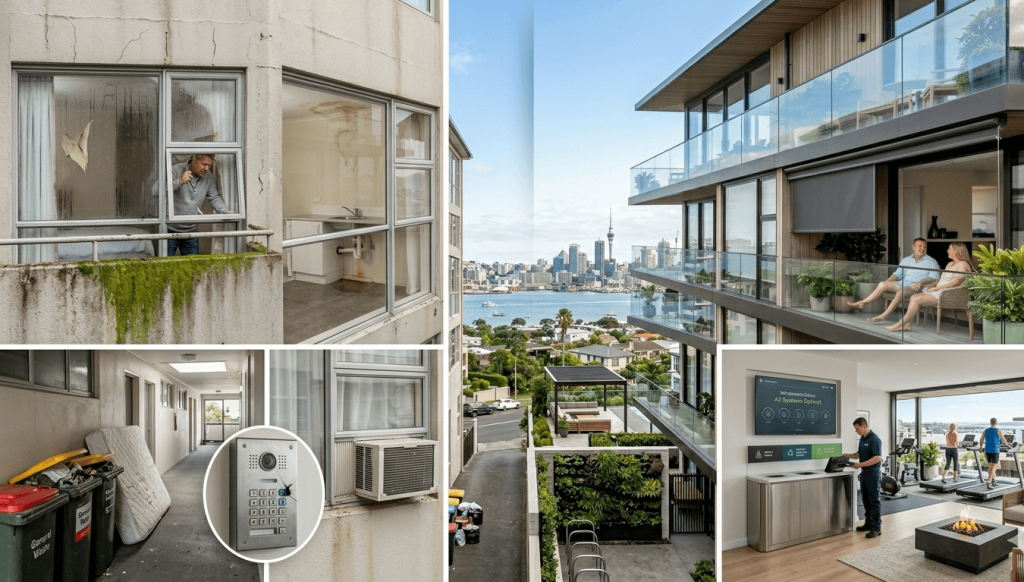
Problem 1: Noise Complaints and Behavioural Issues
Noise is one of the most common triggers for apartment disputes.
Typical causes include:
- Late-night gatherings
- Hard flooring without protection
- Balcony use after quiet hours
- Short-term guest turnover
- Failure to understand building rules
In high-density buildings, complaints often escalate quickly to the body corporate.
How We Prevent It
- Careful tenant screening focused on suitability
- Clear onboarding to building rules
- Written confirmation of behavioural expectations
- Immediate response to early complaints
- Documentation of warnings if required
Prevention starts before the tenancy begins.
Problem 2: Water Ingress and Moisture Issues
Water leaks are common in apartment buildings due to:
- Balcony membrane failure
- Shared plumbing stacks
- Exterior cladding issues
- Roof defects
- Internal fixture failure
Leaks can affect multiple units and escalate into complex disputes among the landlord, the body corporate, and insurers.
How We Prevent It
- Prompt reporting of all moisture concerns
- Immediate coordination with the body corporate
- Contractor assessment documentation
- Clear maintenance logs
- Ongoing follow-up until resolved
Delays create liability. Early action reduces exposure.
Problem 3: Healthy Homes Compliance Gaps
Apartments must comply with Healthy Homes Standards, but older CBD buildings can present challenges.
Common issues include:
- Insufficient heating capacity
- Inadequate bathroom ventilation
- Moisture ingress
- Poor insulation documentation
Even if the building is governed by a body corporate, the landlord remains responsible for compliance.
How We Prevent It
- Pre-tenancy compliance verification
- Heating capacity assessments
- Ventilation checks
- Retention of compliance statements
- Structured documentation systems
Compliance cannot be assumed. It must be verified.
Problem 4: Lift and Move-In Damage
Move-ins and move-outs in apartment buildings create risk.
Common issues include:
- Scratched lift panels
- Damaged hallways
- Broken access systems
- Unauthorised contractor access
Body corporate committees monitor these closely.
How We Prevent It
- Coordinated lift bookings
- Move-in condition documentation
- Clear tenant instructions
- Communication with building managers
- Immediate resolution of reported damage
Structured onboarding reduces friction with building management.
Problem 5: Short-Term Letting Breaches
Some tenants attempt unauthorised short-term letting.
This can:
- Breach building rules
- Invalidate insurance
- Trigger complaints
- Damage landlord’s reputation
How We Prevent It
- Clear tenancy agreement clauses
- Screening for behavioural red flags
- Monitoring occupancy patterns
- Swift action if breaches are suspected
High-density buildings often detect short-term letting quickly.
Proactive management avoids escalation.
Problem 6: Maintenance Delays That Escalate
Maintenance delays in apartments can affect multiple units.
For example:
- Plumbing leaks impacting neighbours
- Electrical faults affecting shared systems
- Balcony drainage failures
If response times are slow, landlords may face:
- Rent reduction claims
- Compensation claims
- Tribunal applications
How We Prevent It
- Immediate maintenance logging
- Pre-approved contractor networks
- Clear escalation protocols
- Written communication records
- Defined approval thresholds
Time matters more in high-density living.
Problem 7: Documentation Failures in Tribunal Cases
Apartment disputes often involve multiple parties.
Without documentation:
- Responsibility becomes unclear
- Timelines cannot be proven
- Verbal agreements fail
- Claims weaken
In many Tribunal cases, documentation determines the outcome.
How We Prevent It
- Detailed entry condition reports
- Ongoing inspection records
- Maintenance logs
- Body corporate correspondence retention
- Written warning notices
- Clear tenant communication records
Professional systems reduce legal exposure.
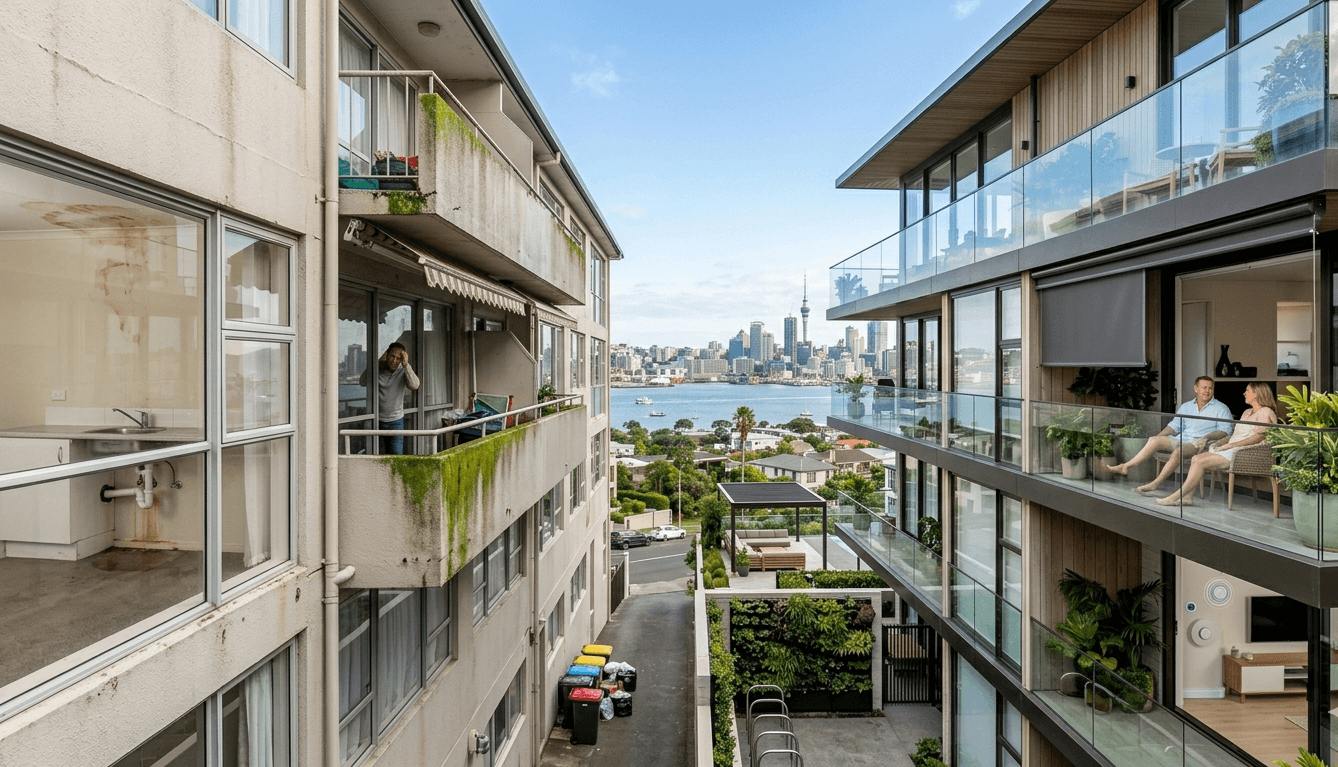
Problem 8: Body Corporate Responsibility Confusion
Landlords sometimes assume the body corporate will resolve issues entirely.
In reality:
- Structural responsibility may sit with the body corporate
- Habitability responsibility sits with the landlord
- Tenants hold landlords accountable
Confusion leads to delay, and delay increases risk.
How We Prevent It
- Early engagement with building managers
- Clarification of responsibility boundaries
- Written escalation
- Regular follow-up
- Transparent reporting to landlords
Apartment compliance requires coordination, not assumption.
Standard Apartment Ownership vs Structured Management
Basic Table:
| Common Apartment Risk | Preventative Management Approach |
|---|---|
| Noise complaints | Careful screening and rule onboarding |
| Water leaks | Immediate reporting and documentation |
| Healthy Homes gaps | Pre-tenancy compliance verification |
| Lift damage | Coordinated move-in processes |
| Short-term letting | Clear agreement clauses and monitoring |
| Maintenance delays | Pre-approved contractors and escalation systems |
| Tribunal exposure | Detailed documentation systems |
| Body corporate disputes | Proactive liaison and written follow-up |
Prevention reduces both financial and reputational costs.
Are City Apartments Still Strong Investments?
Yes. Auckland city apartments remain attractive due to:
- Central location
- Executive tenant demand
- Walkability
- Infrastructure access
- Premium positioning
However, structured management is critical to protect performance.
High-density buildings magnify small mistakes.




Expert Property Management in Auckland City
If you own a rental property in Auckland City and want to reduce vacancy, protect income, and improve long-term returns, the right management strategy makes all the difference.
Talk to 360 Property Management about a smarter approach to managing vacancy – from the start.
For general inquiries or more information, please email 360pm.nz@raywhite.com. If you are an existing client needing assistance, please submit a request through our Client Portal or call (09) 636 7355.
Frequently Asked Questions
High-density living increases the likelihood of neighbour-related issues and shared infrastructure problems.
Water issues can arise in multi-level buildings, particularly where balconies or shared plumbing are involved.
Responsibility depends on circumstances, but documentation of move-ins and behaviour is critical.
Repeated serious breaches can escalate if not managed early and properly documented.
High-density environments increase compliance and coordination complexity, making structured management highly beneficial.
Summary
- High-density apartments carry shared risk exposure
- Noise, water ingress, and compliance gaps are common flashpoints
- Documentation determines outcomes in disputes
- Body corporate coordination is essential
- Preventative systems protect income and asset value
- Structured management reduces escalation